
Industrial operations today demand stable, affordable, and scalable power solutions. Rising electricity tariffs, growing production loads, and increasing dependence on grid power make energy management a critical business priority. Industry solar offers industries a smarter way to control costs, improve efficiency, and strengthen long-term operational stability.
By shifting to solar power, industries move from reactive energy spending to a more controlled and future-ready approach. It is not just an energy solution, it is a strategic investment that supports growth, resilience, and long-term operational success.
Industrial operations today demand stable, affordable, and scalable power solutions. Rising electricity tariffs, growing production loads, and increasing dependence on grid power make energy management a critical business priority. Industry solar offers industries a smarter way to control costs, improve efficiency, and strengthen long-term operational stability.
By shifting to solar power, industries move from reactive energy spending to a more controlled and future-ready approach. It is not just an energy solution, it is a strategic investment that supports growth, resilience, and long-term operational success.
For most industrial units, electricity is one of the largest recurring operational expenses. Heavy machinery, continuous production cycles, and high load requirements make industries highly sensitive to power cost fluctuations.
Solar energy transforms power from a variable cost into a controllable asset, giving industries greater financial predictability.
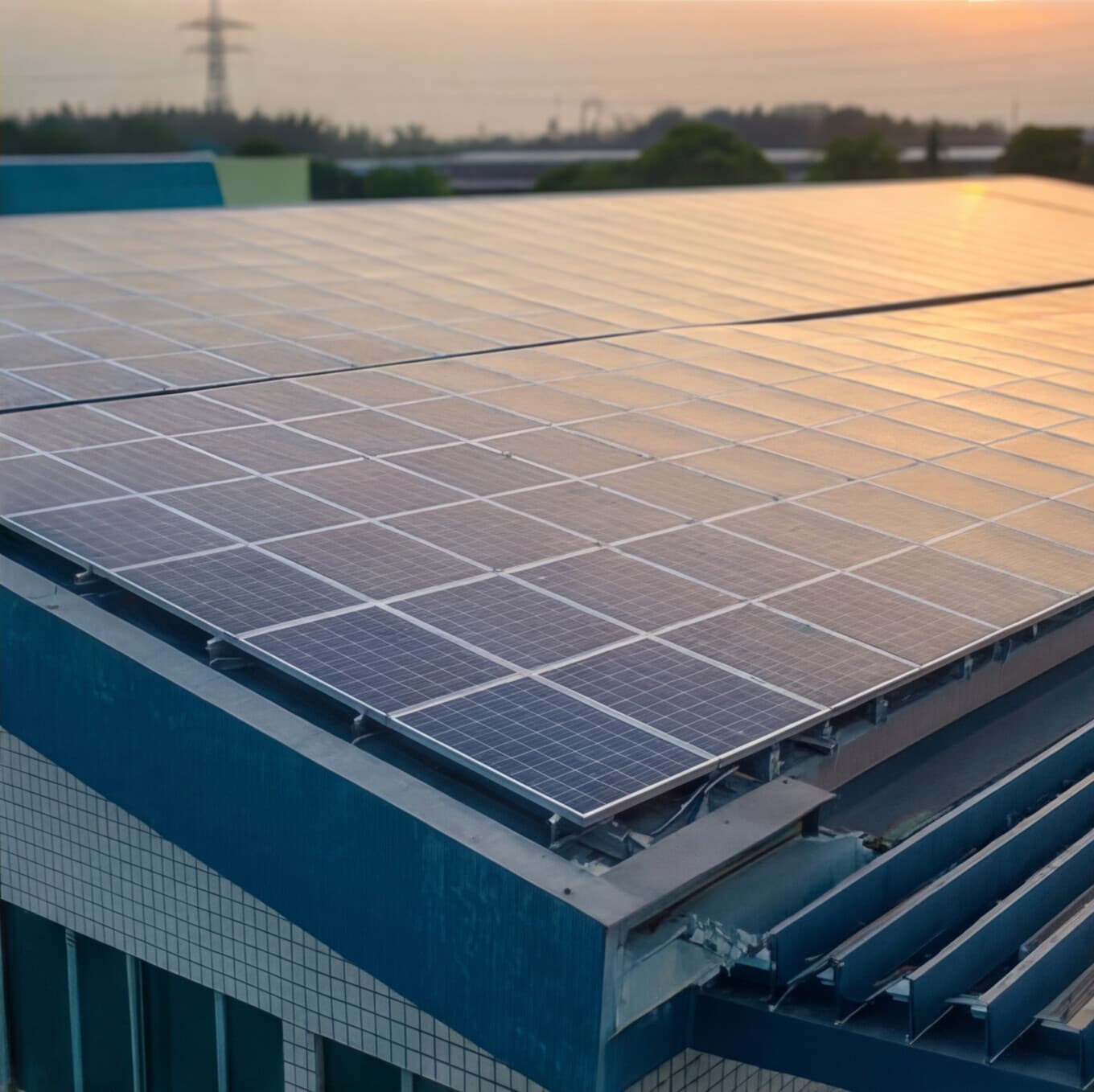
Industry solar transforms how energy is produced and managed across large-scale operations. Instead of depending entirely on external power sources, businesses gain greater control over their energy consumption and long-term costs. This industrial solar panel installation shift creates stability, predictability, and operational efficiency.
• A significant portion of daytime power demand is met through on-site solar generation
• Reduced dependency on high-cost grid electricity
• Lower diesel generator usage, cutting fuel and maintenance expenses
• More predictable and stable energy costs over time
• Improved control over energy planning and operational continuity
Industrial solar systems are designed to integrate smoothly with existing electrical infrastructure without disrupting daily operations. Power generation aligns closely with daytime production schedules, allowing solar energy to support the base load while the grid continues to act as a reliable backup.
The system is engineered to adapt to varying shift patterns and load requirements, ensuring that machinery and manufacturing processes run without interruption. This seamless integration allows businesses to benefit from solar energy without changing workflows or affecting operational efficiency.
Solar energy for business and for industrial setups requires different solar configurations based on space, power demand, and operational needs.
Ideal for factories and warehouses with large roof areas, these systems use unused rooftop space to generate power without affecting ground operations. They are cost-effective and easy to integrate with existing infrastructure.
Best suited for facilities with available land, these systems allow higher capacity installations and flexible orientation for maximum energy generation. They are commonly used for large-scale industrial power needs.
These combine solar power with grid electricity and backup sources like DG sets. Hybrid setups ensure uninterrupted power supply, especially during peak loads or grid outages, making them ideal for critical operations.
Each configuration is chosen based on feasibility, energy demand, and the need for consistent, reliable power.
Before moving forward with a solar installation, it’s important to understand whether your facility is technically and operationally ready. Solar panel for industrial use for every industrial site are different. It has a unique energy profile, and a proper assessment helps ensure the system is designed for efficiency, safety, and long-term performance. This step helps avoid over- or under-sizing and ensures the investment delivers consistent returns.
Evaluation of rooftop strength, open land availability, and usable area for optimal industrial solar panel installation.
Analysis of daily, seasonal, and peak load usage to match system capacity with actual demand.
Assessment of building structure to ensure it can safely support the solar installation.
Planning for possible load growth, machinery additions, or facility expansion without redesigning the system later.
A detailed feasibility assessment ensures the solar solution aligns with both present operational needs and long-term business growth, delivering stable performance and predictable savings over time.
Every successful industrial solar project starts with careful engineering. Detailed site analysis and load assessment ensure the system is designed to match actual operational demands and safety requirements.
During execution, experienced teams follow structured installation processes that minimize disruption to daily operations. Safety standards, quality checks, and proper coordination help ensure a smooth and efficient setup.
Strong risk management practices are built into every stage. From design validation to final commissioning, the focus remains on reliability, long-term performance, and protecting critical business operations.
Industrial solar is a long-term infrastructure investment.
• Initial capital investment based on system size
• Typical payback periods ranging between 3 and 5 years
• Long-term energy savings across 20–25 years
• Reduced exposure to tariff increases and fuel price volatility
Well-designed systems deliver predictable savings and strong lifecycle returns.
Industrial solar installations must meet defined technical and legal requirements to ensure safe and uninterrupted operation.
Following these guidelines ensures smooth operations, regulatory clarity, and long-term reliability.
Businesses can benefit from government policies designed to promote solar adoption.
Our team supports businesses throughout the entire process, ensuring compliance and smooth access to available benefits.
This structured and professional approach ensures a smooth transition to clean, reliable solar power for your business—without disrupting daily operations.
Our team begins with a detailed site visit to your commercial property. We assess roof structure, available space, sunlight exposure, and your current electrical setup. This helps us design a solar solution that fits your business operations and energy requirements accurately.
Based on the assessment, we create a customized solar system plan tailored to your commercial load. The design focuses on maximum efficiency, long-term performance, and seamless integration with your existing electrical infrastructure.
We handle all required permissions, utility approvals, and documentation on your behalf. This ensures a smooth process without any administrative burden on your team.
Our experienced technicians carry out the installation with minimal disruption to your business operations. The installation is planned strategically to ensure safety, speed, and quality workmanship.
After installation, the system undergoes thorough testing to ensure optimal performance. Once approved, your commercial solar system is activated and begins generating power immediately.
Your business starts using commercial solar energy as the primary power source. Any excess power generated is sent to the grid, helping reduce overall electricity costs and improving energy efficiency.
Our support doesn’t end after installation. We provide regular performance monitoring, maintenance guidance, and technical assistance to ensure your commercial solar panel continues to operate efficiently for years to come.
Our team visits your home to check roof space, sunlight direction, and existing electrical setup. This helps us design the most suitable solar system for residence based on your actual needs.
Based on the site details, we create a customized solar plan that fits your home and power usage. The layout is designed to give maximum output and long-term savings.
We take care of all approvals, paperwork, and formalities required for installing solar panels for home. You don’t have to run behind offices or worry about procedures. based on your actual needs.
Our trained technicians install the solar panels safely and efficiently. The process is quick, clean, and causes minimal disturbance to your daily routine.
Once installation is complete, the system is tested thoroughly. After successful testing, your solar power for home is activated and starts generating electricity.
Your home begins using solar power first. Any extra energy produced is sent to the grid, helping reduce your electricity bill automatically.
Even after installation, we stay connected. We offer performance checks, guidance, and long-term support to ensure your home solar system works efficiently for years.
Our team begins with a detailed site visit to your commercial property. We assess roof structure, available space, sunlight exposure, and your current electrical setup. This helps us design a solar solution that fits your business operations and energy requirements accurately.
Based on the assessment, we create a customized solar system plan tailored to your commercial load. The design focuses on maximum efficiency, long-term performance, and seamless integration with your existing electrical infrastructure.
We handle all required permissions, utility approvals, and documentation on your behalf. This ensures a smooth process without any administrative burden on your team.
Our experienced technicians carry out the installation with minimal disruption to your business operations. The installation is planned strategically to ensure safety, speed, and quality workmanship.
After installation, the system undergoes thorough testing to ensure optimal performance. Once approved, your commercial solar system is activated and begins generating power immediately.
Your business starts using commercial solar energy as the primary power source. Any excess power generated is sent to the grid, helping reduce overall electricity costs and improving energy efficiency.
Our support doesn’t end after installation. We provide regular performance monitoring, maintenance guidance, and technical assistance to ensure your commercial solar panel continues to operate efficiently for years to come.
Industrial solar systems are engineered to deliver consistent output over long periods, even under demanding operating conditions. High-quality components ensure minimal performance degradation year after year. This allows businesses to rely on stable energy generation for daily operations without unexpected fluctuations.
Continuous performance monitoring enables early detection of inefficiencies or irregularities. Real-time tracking helps maintain optimal output while ensuring that the system operates within safe parameters. This proactive approach minimizes downtime and protects long-term energy production.
Preventive maintenance programs are designed to keep the system running efficiently throughout its lifecycle. Regular inspections, timely servicing, and responsive technical support ensure dependable performance. Together, these measures provide long-term operational confidence and consistent energy returns.
Industrial decision-makers look for reliability, not promises. They choose solar partners who understand large-scale operations and can deliver predictable outcomes.
Key reasons businesses prefer experienced providers include:
These factors give businesses confidence that their solar investment is handled professionally and built to perform over the long term.
Gemini Solariss is trusted by businesses for delivering reliable and well-engineered industrial solar power system. We understand that every facility has unique energy demands, and our approach is built around designing systems that truly match operational needs.
Our team focuses on precision planning, quality execution, and long-term performance, ensuring that every project delivers measurable value. From the first assessment to final commissioning, we follow a structured process that minimizes disruption and maximizes efficiency.
We bring strong technical expertise backed by real-world industrial experience. Each industry solar system is designed with attention to safety, durability, and consistent output, helping businesses reduce operational risks and control energy costs.
Transparency is at the core of how we work. Clients receive clear communication, realistic timelines, and complete visibility into every stage of the project. There are no hidden steps—only informed decisions. Among other solar energy for businesses, we remain a long-term partner. With ongoing support, performance monitoring, and service assistance, Gemini Solariss ensures your solar investment continues to deliver value year after year.
After installing the commercial solar system, our power costs reduced significantly within the first few months. The transition was smooth, and there was no disruption to our production schedule. The system has been running reliably and has helped us control our energy expenses effectively.
We were looking for a stable and long-term energy solution. The solar installation helped us reduce dependence on grid power and manage peak-hour loads efficiently. The execution was professional, and the system performance has been consistent since commissioning.
Our main concern was operational reliability. The solar setup integrated seamlessly with our existing electrical infrastructure. Power stability improved, and the savings are clearly visible in our monthly energy costs. It has proven to be a smart infrastructure investment for our plant.
No. Industrial solar system are designed to support heavy loads without interfering with machinery operations. Power is supplied seamlessly, with the grid acting as backup whenever required.
Solar systems are engineered to operate efficiently even during cloudy or rainy conditions. During low generation periods, the grid automatically supports the load, ensuring uninterrupted operations.
Maintenance is handled through scheduled inspections, performance monitoring, and preventive servicing. This ensures long-term reliability, quick issue resolution, and consistent power output.

Empowering a sustainable future with top-notch solar solutions from consultation, site visit, excellent plan, exceptional installation and maintenance support, helping you save on energy costs while welcoming green energy.
2026 Gemini Solariss. All Rights Reserved.